

Understanding Hip Replacement Surgery: What It Is, What to Expect & How Recovery Really Looks
Hip pain doesn’t just slow you down—it can impact how you walk, sleep, work, and enjoy everyday activities. For many people in the Greater Waterbury area, degenerative conditions affecting the hip, such as hip arthritis to constant discomfort that no longer responds to medication, injections, or physical therapy. When that happens, an orthopedic specialist may recommend one of the most reliable and life-changing procedures in modern medicine: hip replacement surgery.
If you’re considering total hip replacement or wondering whether it might be right for you, here’s what patients want to know most!
What is a Hip Replacement?
A hip replacement, also known as total hip arthroplasty (THA), is a surgical procedure designed to remove damaged portions of the hip joint and replace them with smooth, durable artificial parts. Since the hip is a ball-and-socket joint, arthritis or injury can wear down the cartilage that allows the bones to glide comfortably—resulting in stiffness, swelling, and significant pain.
During a hip replacement:
- The damaged “ball” (top of the thigh bone) is replaced with a metal or ceramic ball
- The worn socket in the pelvis is fitted with a smooth artificial cup
- A spacer is placed between the components to allow fluid, pain-free motion
These carefully engineered parts dramatically reduce pain and restore mobility.
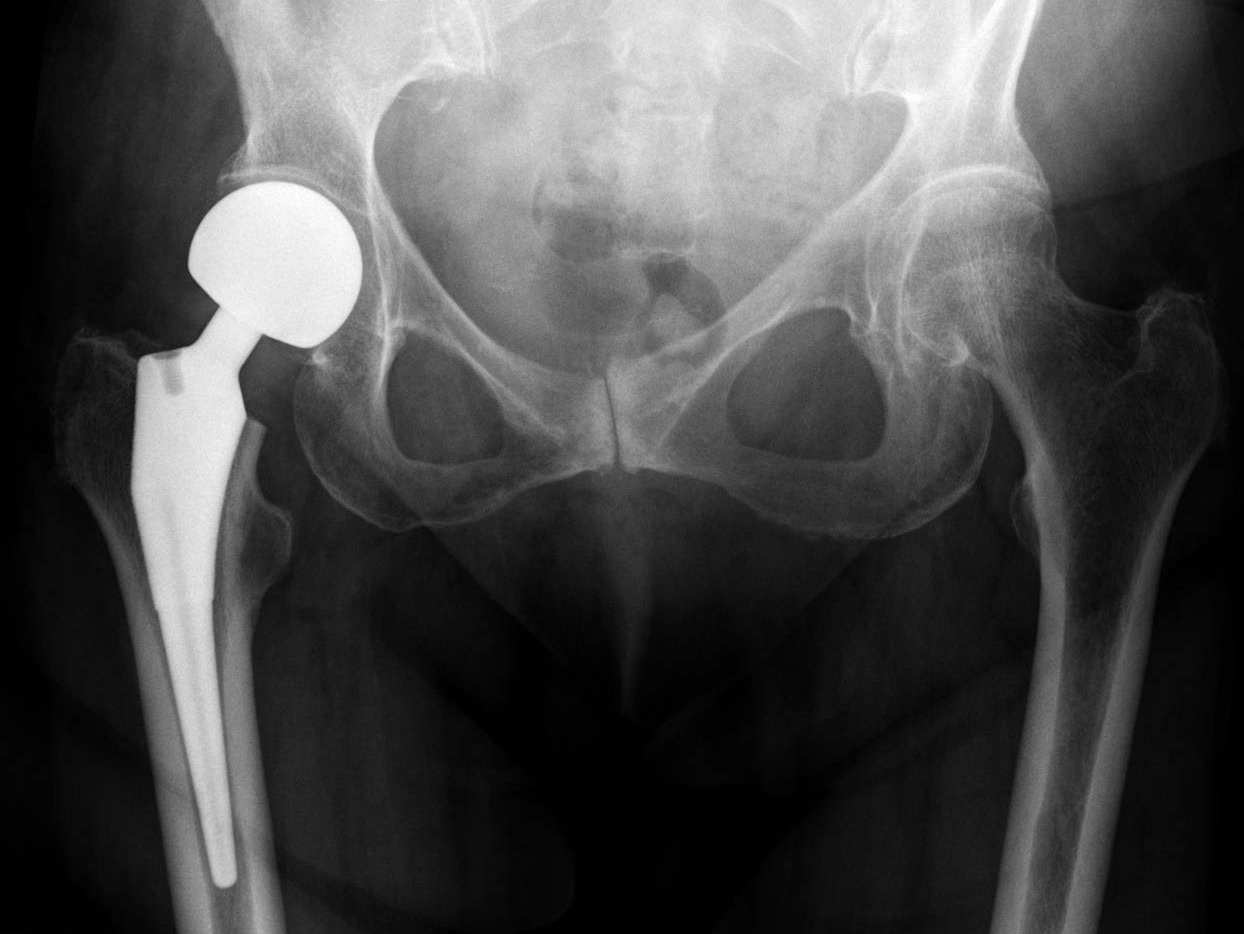
What Does a hip Implant Look Like?
While patients never see the implant, many find it helpful to understand what’s inside the body. A typical hip replacement includes:
- A metal stem secured inside the femur
- A ceramic or metal ball
- A metal socket lined with a smooth surface
- A durable plastic or ceramic spacer that allows easy, low-friction movement
This combination creates a stable, strong, long-lasting joint that can often last 20-30 years or more thanks to modern surgical techniques and materials.
How Do You Know It’s Time for Hip Replacement?
You may be ready to discuss hip replacement surgery with a Waterbury Hospital Orthopedic surgeon if you experience:
- Severe hip pain limiting walking or daily tasks
- Pain going up stairs or standing for long periods
- Morning stiffness or difficulty rotating the leg
- Trouble putting on shoes or socks
- A hip that feels unstable or “gives out”
- Night pain that interrupts sleep
- No relief from medication, therapy, or injections
If these symptoms affect your quality of life, it may be time to consider hip replacement as a long-term solution.
Does Hip Replacement Surgery Really Work?
Yes—exceptionally well!
Hip replacement consistently ranks as one of the most successful orthopedic surgeries, with over 90% of patients reporting significant improvement.
Most patients experience:
- Life-changing pain relief within weeks
- Dramatic improvements in walking, flexibility, and mobility
- Restored independence and ability to do daily activities
- The freedom to return to low-impact exercise
- Long-lasting results that often span decades
Many patients say, “I wish I had this done sooner!”
What Does Hip Replacement Recovery Look Like?
Recovery is a team effort, and your orthopedic surgeon and physical therapists guide you every step of the way. Here’s what the recovery timeline can look like:
- Day of Surgery
- Patients usually take a few steps with assistance
- Many go home the same day or after one night
- First 1-2 Weeks
- Walking daily with a walker or cane
- Expected swelling and soreness, which improve steadily
- Beginning gentle exercises to strengthen the muscles around the hip
- Weeks 3-6
- Transitioning from walker to cane—or sometimes no device at all
- Improved balance and range of motion
- Returning to light daily activities
- 6 Weeks & Beyond
- Many return to driving and work (depending on job demands)
- Beginning low-impact activities like walking, swimming, or cycling
- Long-Term
- A natural-feeling, pain-free hip that allows years of comfortable movement
Minimally invasive techniques, such as the anterior approach hip replacement, can further speed recovery and reduce muscle disruption.
Take the First Step Toward Pain-Free Living
A hip replacement isn’t just a surgical procedure—it’s a pathway back to your life. For many patients in the Waterbury community, hip replacement surgery means walking without pain, returning to work, enjoying family activities, and reclaiming independence
At Waterbury Hospital Orthopedics, our expert hip specialists are here to guide you through every part of your journey. Whether you’re exploring non-surgical options or considering hip replacement surgery, we’ll help you make the best decision for your health. Schedule your consultation today and take the first step toward a stronger, more active you!
Our Providers
Related Articles
-
Hip Replacement Surgery: How Modern Techniques and New Technology Are Changing the Way We Restore Movement
-

Anatomic vs. Reverse Total Shoulder Arthroplasty: What’s the Difference & Which one is Right for you?
-

Understanding Overuse Injuries: Causes, Symptoms, and Prevention
-

Same Day Total Joint Replacement: What You Need to Know